
Cabbage Koora
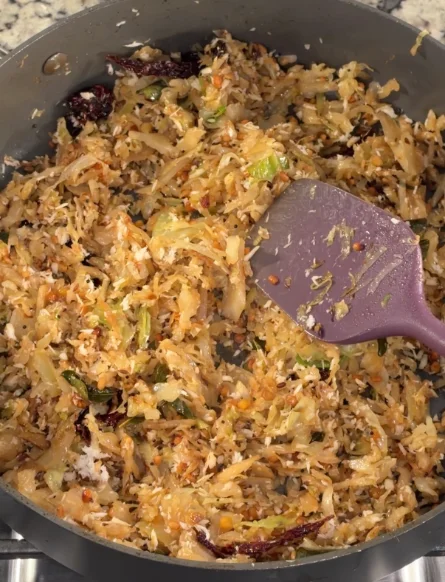
A quick tempered cabbage side dish that pairs perfectly with rice.
Ingredients
- ✦1 tbsp oil
- ✦1 tsp mustard seeds
- ✦1 tsp cumin seeds
- ✦1 tbsp urad dal
- ✦1 tbsp chana dal
- ✦Dried red chillies (optional, to taste) *
- ✦8–10 curry leaves
- ✦Pinch of hing (asafoetida)
- ✦2 bags preshredded cabbage, or about 5 cups fresh shredded cabbage
- ✦Salt, to taste
- ✦¼ cup fresh or frozen shredded coconut
Note Use fresh or frozen coconut here, not dried. The flavor is completely different.
* See dosha swaps
Method
- 1Heat the oil, then temper the mustard seeds, cumin, urad dal, chana dal, and chillies. Cook until the dals turn golden and the mustard seeds start to pop, about 1–2 minutes.
- 2Add the curry leaves and hing, and mix.
- 3Add the cabbage, mix it thoroughly so the spices combine with the cabbage. Cover and cook for 3–4 minutes. Mix every 2–3 minutes.
- 4Uncover, add salt, and keep cooking uncovered until the cabbage turns light golden brown and soft, about 5–7 minutes.
- 5Stir in the coconut, mix well, cook another 2–3 minutes, and it's done.
What is Koora?
Koora is the Telugu word for a dry-style vegetable preparation, a staple in South Indian, especially Andhra and Telangana, home cooking. Unlike a gravy-based curry, koora is all about the vegetable itself: lightly tempered with spices, cooked down until tender, and finished simply, often with a touch of coconut or cilantro. It's humble, everyday cooking, the kind of dish that shows up alongside rice and dal in most home kitchens, valued for how quickly it comes together and how well it lets the vegetable shine.
Want to learn more about the ingredients and swaps? Keep scrolling.
Why It Works
Ingredient Benefits
Mustard seeds These are the first thing that hits the oil for a reason. They get digestion moving and shake loose any stagnation.
Cumin seeds If I had to pick one digestive spice to never cook without, it's this. Cuts bloating, cuts gas, helps you actually absorb what you're eating.
Urad dal Just a small amount for the tempering. Grounding, nutty once toasted, and gives the tadka that little crunch. Roasting it also makes it lighter and easier to digest.
Chana dal Light and drying compared to urad dal, helps balance kapha while still adding protein.
Hing (asafoetida) A pinch of this does so much for digestion and gas. Get a good quality one though, it genuinely changes the flavor.
Curry leaves Known as kadi patta or karuveppilai, these are non negotiable in South Indian tempering. Traditionally thought to support digestion and packed with iron and antioxidants.
Cabbage Light and cooling by nature, with a tendency to increase vata when raw. Cooking it, especially with warming spices, offsets that.
Coconut Sweet, cooling, and nourishing. Pacifies pitta and vata, but too much can aggravate kapha.
Dosha Adjustments
Vata
Increase the oil slightly, and keep the hing, urad dal, and curry leaves in for grounding. Be generous with the coconut, and cook the cabbage until it is fully soft.
Pitta
Skip the dried red chillies, and keep the coconut in for its cooling effect. Go easy on the mustard seeds, and the curry leaves will help balance the heat. Optionally add cilantro at the end.
Kapha
Lean into the warming spices, extra mustard seed, extra cumin, and dried chillies. Keep the coconut to a light sprinkle.
Made with love for your gut health