
Pongal
Kitchari is Ayurveda's go to for a gut reset. It's a complete protein, easy to digest, and very grounding. Kitchari looks different across every state and kitchen in India. This version comes from Tamil Nadu in South India, and it's called Pongal.
Ingredients
- ✦1 cup basmati rice
- ✦1 cup yellow moong dal/lentils
- ✦5 cups water
- ✦Salt to taste
- ✦1 tbsp ghee
- ✦½ tsp mustard seeds
- ✦½ tsp cumin
- ✦1 tsp peppercorns (less for milder heat)
- ✦1 tsp grated ginger
- ✦¼ cup sliced cashews (optional)
- ✦1 sprig curry leaves (7–10 leaves)
- ✦Pinch of hing
Method
- 1Wash the rice and dal until the water runs clear. Save the starchy water for your plants, it helps them grow. Soaking 30 min to 1 hour is optional and makes the pongal even more digestible, but if you're short on time, you can skip it and cook straight away.
- 2Use a 1 : 2.5 ratio of grain to water. For 2 cups of rice and dal together, add 5 cups of water.
- 3Pressure cook in an Instant Pot on rice mode, or on manual mode for 12 minutes.
- 4Once the pressure releases, stir in water until the pongal reaches the consistency you like. For creamier pongal, add a little more water. Add salt to taste.
- 5Stir in a tsp of ghee until the pongal turns creamy.
- 1Add ghee to a small pan and let it melt.
- 2Add mustard seeds, cumin, and peppercorns first.
- 3Once the mustard seeds pop, add grated ginger and cashews and let them roast a bit, then add the curry leaves, and finally a pinch of hing.
- 4Add the tempering to the rice and dal mixture and stir until combined.
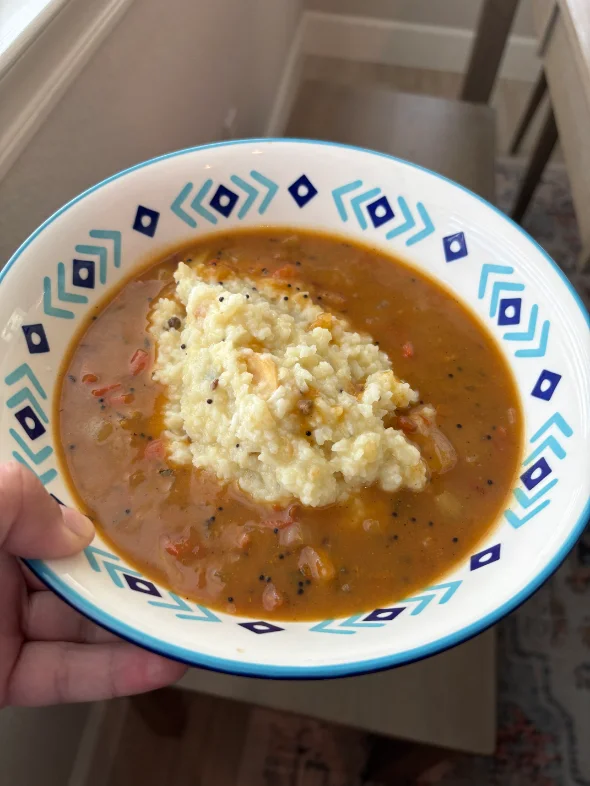
- 5Serve with your favorite topping: roasted veggies, stews, Indian pickles, anything you like. In this picture, it's topped with a tomato and onion gojju.
Curious why this dish works so well for digestion? Keep scrolling.
Why It Works
Pongal isn't just comfort food, it's Ayurveda's original gut reset. Here's why this bowl does so much more than fill you up.
Ingredient & Spice Benefits
Moong dal This is the most valued lentil in Ayurveda, and for good reason. It's considered tridoshic, meaning it balances all three doshas, sweet and cooling in nature, and easier to digest than any other legume. It's often the first food given to babies and the go to during illness or recovery, since it nourishes the body without taxing digestion.
Basmati rice White rice, especially basmati, is considered the lightest and most digestible of all grains in Ayurveda. It's sweet and cooling, builds ojas (your body's deep reserve of vitality), and has a calming, grounding effect on the mind. It's also considered sattvic, meaning pure and clarity supporting, which is part of why rice shows up so often in Ayurvedic cooking, especially for anyone recovering from illness or dealing with sensitive digestion.
Ghee Builds ojas, your body's deep reserve of vitality and immunity. It lubricates digestion, helps you absorb the fat-soluble nutrients from these spices, and is one of the most sattvic fats you can eat.
Mustard seeds Get digestion moving and shake loose stagnant energy. That is why they go in first, right at the start of the tempering.
Cumin One of the best digestive spices there is. It cuts down bloating and gas and helps your body absorb what's in the dal.
Black peppercorns Heating and stimulating, this helps burn through ama, the toxic buildup Ayurveda blames for most imbalance.
Fresh ginger Your classic digestive helper. Warms the gut, settles nausea, and balances the heaviness of the lentils.
Hing (asafoetida) Promotes digestion and reduces gas, cutting the gas-producing quality of lentils. That is why it is in almost every dal dish.
Curry leaves Known as kadi patta in Hindi or karuveppilai in Tamil, where Pongal is from, curry leaves are a staple in South Indian tempering for good reason. They stimulate digestion, help balance kapha and pitta, and are rich in iron and antioxidants.
Cashews Cashews are native to Brazil, so they're not part of the classical Ayurvedic tradition, but they show up often in modern Ayurvedic practice. They're thought to be grounding for vata, may be fine in moderation for pitta, and are often better kept minimal or skipped for kapha, since they tend to be heavy and oily. Optional here either way, added for richness and texture.
Moong Dal + Rice = A Complete Protein
Moong dal and rice together make a complete protein. Rice is low in the amino acid lysine but high in methionine. Moong dal is the opposite, high in lysine, lower in methionine. When you put them together, that's when the magic happens. You've now created something that is a complete protein, easily digestible and gut friendly.
Why It's So Easy to Digest
Moong dal is already the easiest lentil to digest, light, cooling, none of the heaviness you get from other dals. Then you pressure cook it with rice until it's soft and almost creamy, so your body barely has to work for it. Soaking before cooking softens everything even more. And the tempering isn't just for flavor, those spices fire up your digestion so this meal moves through you clean instead of sitting heavy.
Dosha Adjustments
Vata
This dish is naturally grounding for vata as is, no changes needed. If you want to lean into it further, keep the kitchari on the soupier side and don't be shy with the ghee.
Pitta
For pitta, reduce or skip the peppercorns and ginger. Top it with fresh cilantro and a squeeze of lime for extra cooling.
Kapha
For kapha, adding more pepper may help cut through kapha's heavier, slower qualities. You could also keep the water on the lower side so it's thicker rather than soupy, and lean into the ginger. Skipping the extra ghee stirred into the kitchari itself can help too, ghee in the tempering may be enough on its own, and you may want to skip the cashews as well, since they tend to be heavy and oily, which isn't typically ideal for kapha.
Made with love for your gut health